Per Aspera Ad Astra

High-altitude ballooning

13 May 2021 — meteorological balloon experiments in Győr, on and around the roof of Széchenyi István University.

The experiment

On the occasion of World Telecommunication Day we carried out meteorological balloon experiments on 13 May 2021 in Győr, on and around the roof of Széchenyi István University. The experiments had several goals; here we publish the results of the measurements.

We released several balloons during the experiment, four of which carried technical equipment.

High-altitude ballooning

Balloon payloads

Balloon 1

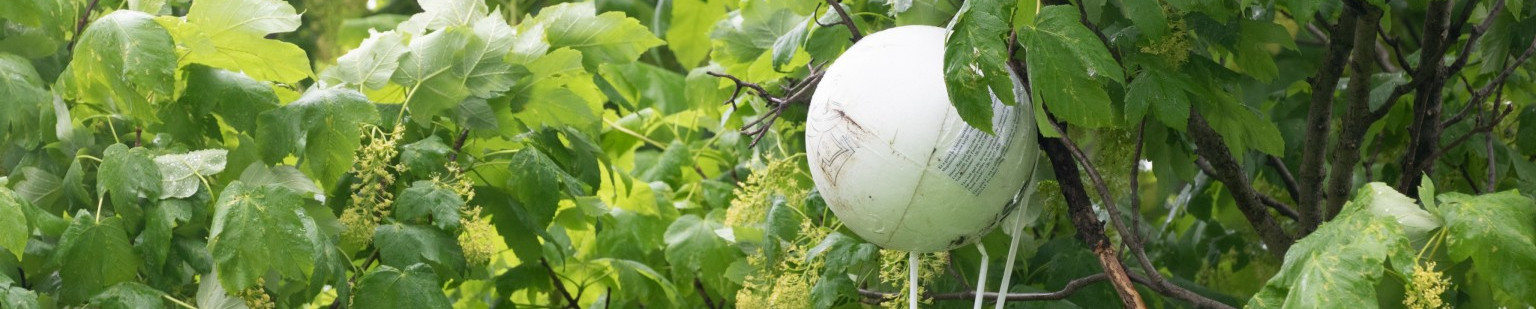
The balloon of remembrance

We named the first balloon the balloon of remembrance. As we celebrate World Telecommunication Day, we wanted to commemorate the professionals who did so much for the technology we enjoy today — including those who left the profession during the pandemic.

Its equipment was modest: a meteorological sonde and a beacon so that we could follow the balloon. We also attached a memorial wreath. This balloon could be tracked openly by anyone.
Balloon 2

Live video and LoRa

Live video and LoRa

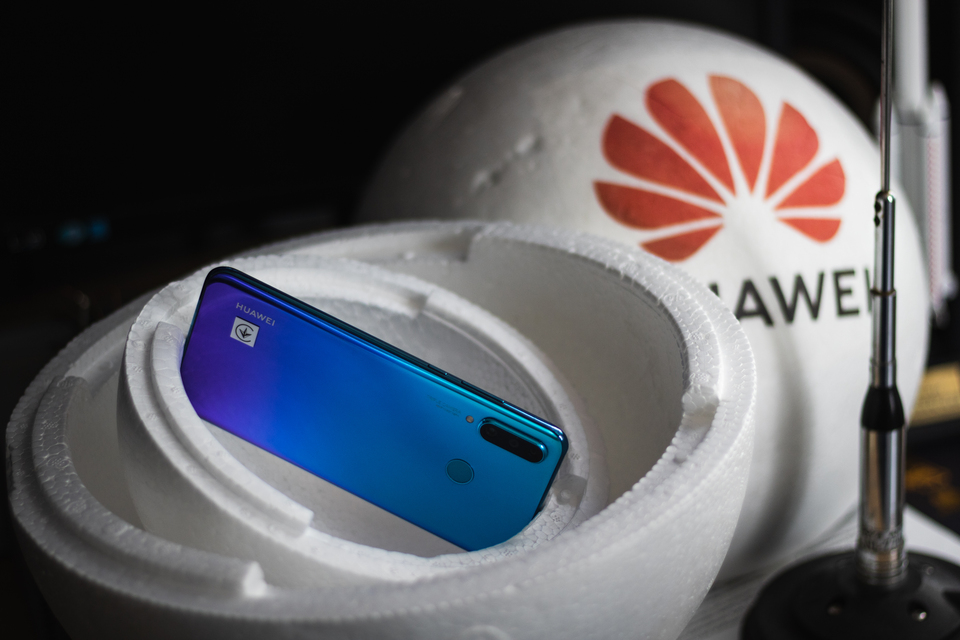
The task of the second balloon was to broadcast live images from the sky. We mounted a special mobile phone transmitting high-resolution video. The stream stayed live as long as terrestrial base stations were reachable; after the link dropped, the recording was saved to internal memory. The phone was tested in a thermal chamber and subjected to radio-frequency tests, and we developed insulation through which the camera has a clear view while the useful heat stays inside.

LoRa is a well-known representative of IoT communication with its distinctive modulation and data transfer capabilities. We placed such a device on the sonde, providing data in LoRa format alongside our beacon. As many receiving stations worldwide can pick up LoRa packets and forward them — in our case to our own server — we used this balloon to test LoRa communication and to see how far away our signals could still be received at given power levels.

Balloon 3

Mobile network measurements

The main role of the third balloon was collecting mobile network data. We used ordinary phones offered by Huawei Hungary for our experiments, running custom software that recorded the data of every mobile network the radio could see, regardless of the SIM operator. These measurements show clearly what radio-frequency signals reach the atmosphere unnecessarily — at 28,000 metres nobody is likely to make a phone call. Evaluating the results, we obtained a map showing which countries' operators can be received above Hungary as altitude increases.

Insulation matters here too: according to manufacturer data mobile phone batteries stop working below −13 °C, so the phone had to be kept above that even at an outside temperature of −70 °C. Two nested polystyrene spheres with an air layer between them protect against the cold. Temperature changes were recorded with iButton loggers.

Balloon 4

Complementary measurements

This balloon also carried a mobile phone for further network measurements and a camera recording footage. Unfortunately a problem occurred with the balloon — probably too little helium — so it did not travel far and its data is not significant.

Landing points

The landing points of the equipped balloons were recorded in the region around Győr, and the sondes were recovered accordingly.

Insulation test

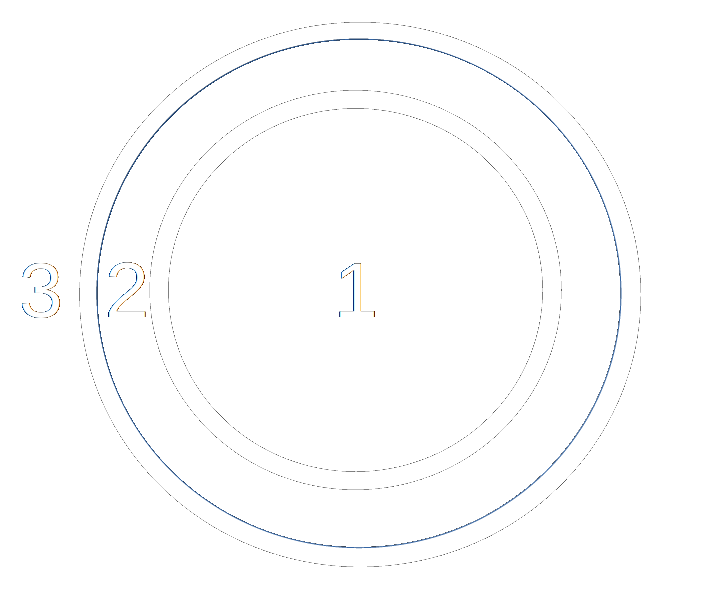
We tested the devices attached to the balloon in a thermal chamber, but we were curious about the temperatures achieved thanks to the insulation under real atmospheric conditions. We placed iButton temperature loggers in the different layers of the insulating spheres, continuously monitoring and storing the temperature changes. These values are instructive for our future tests.

The image shows the two nested polystyrene spheres of the insulation; the numbers help identify the layers.

Insulation test