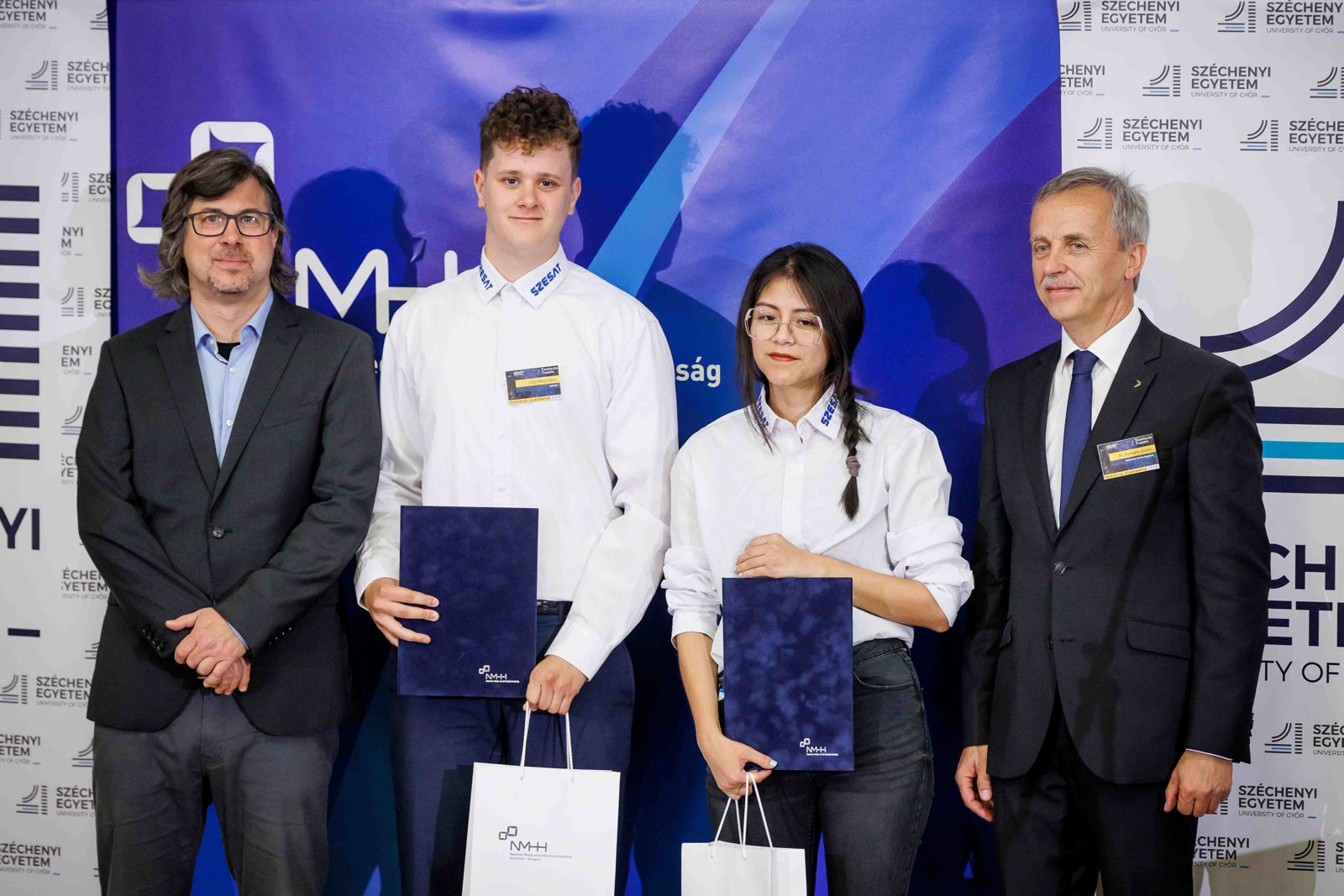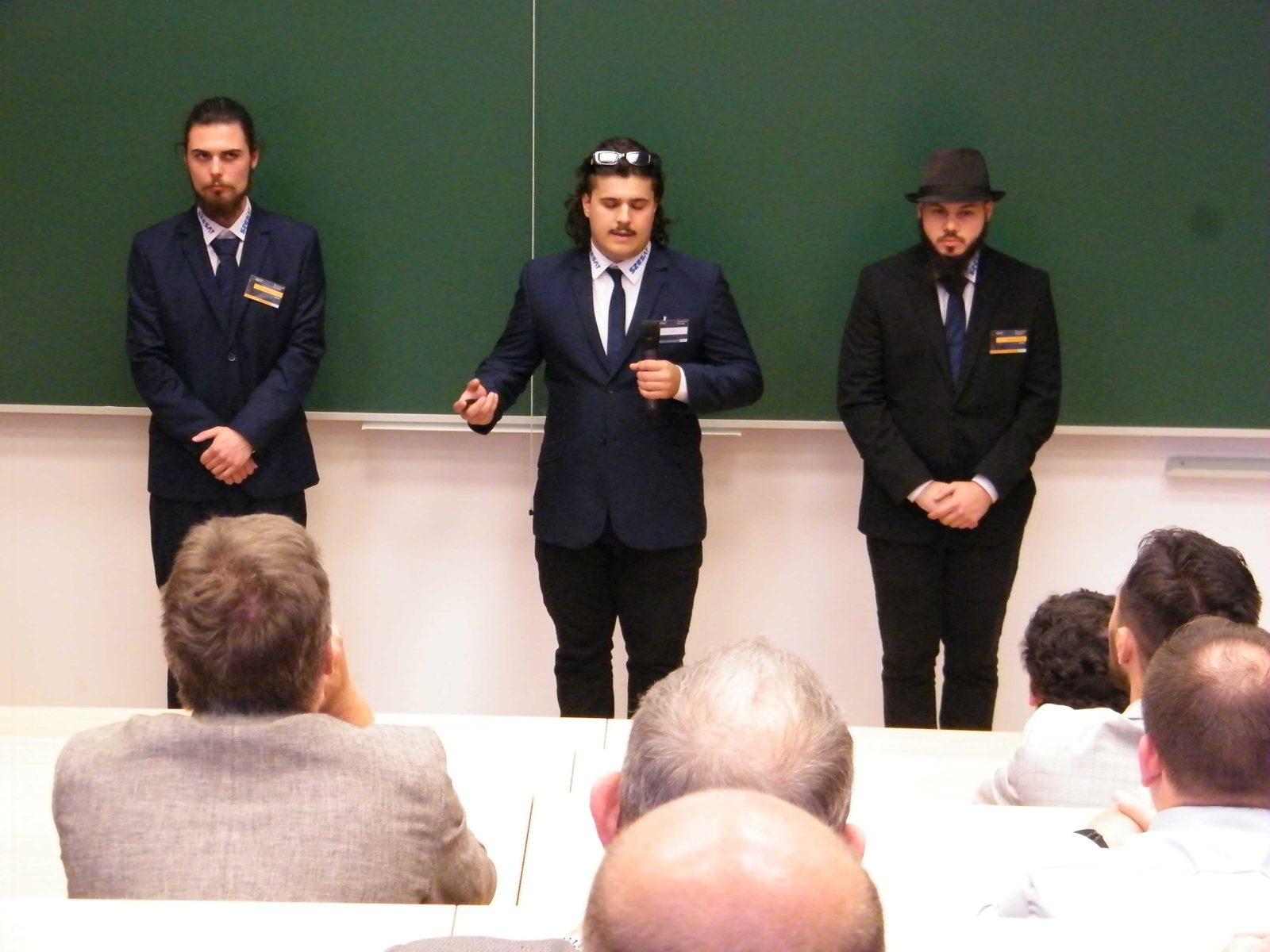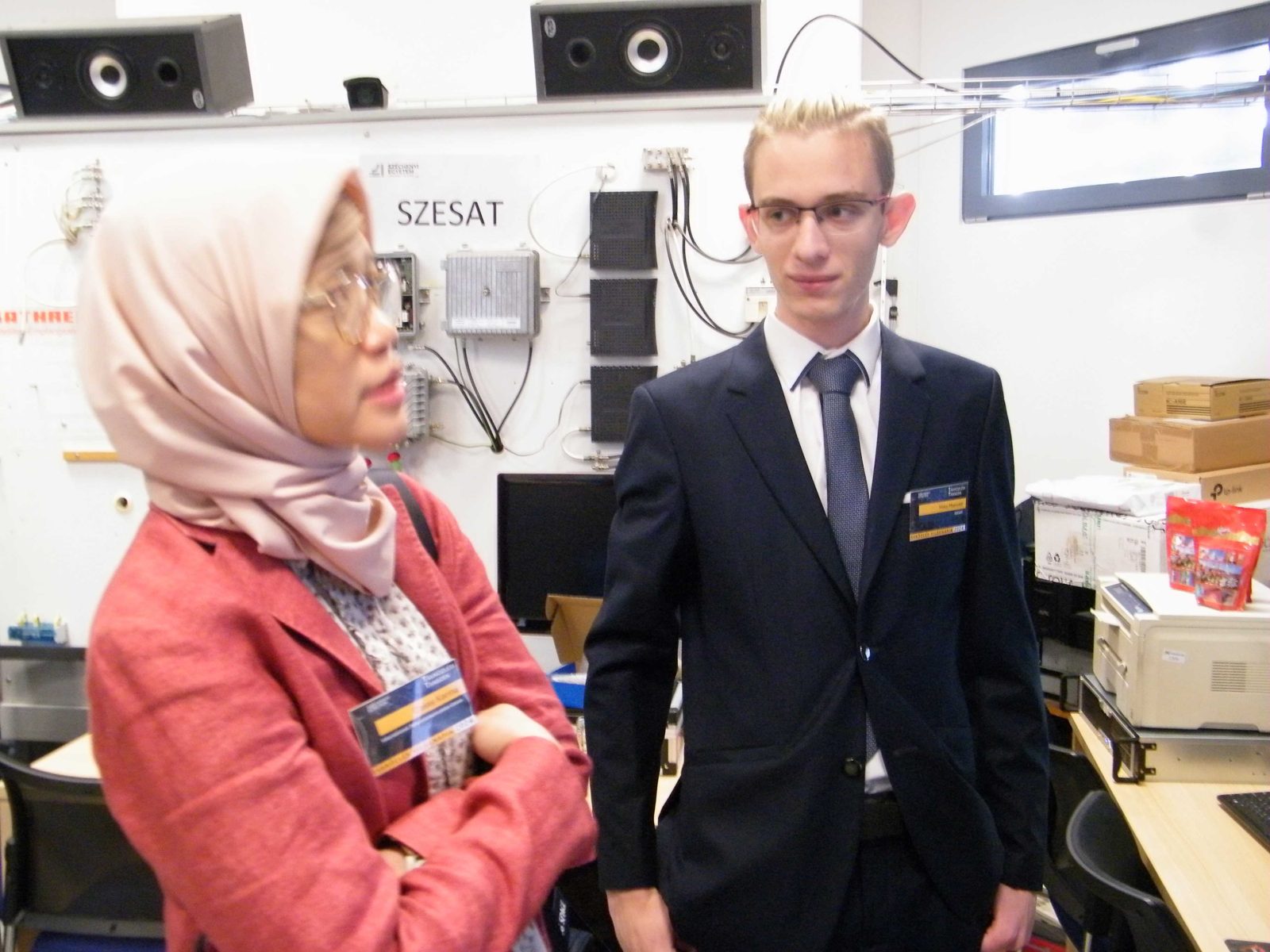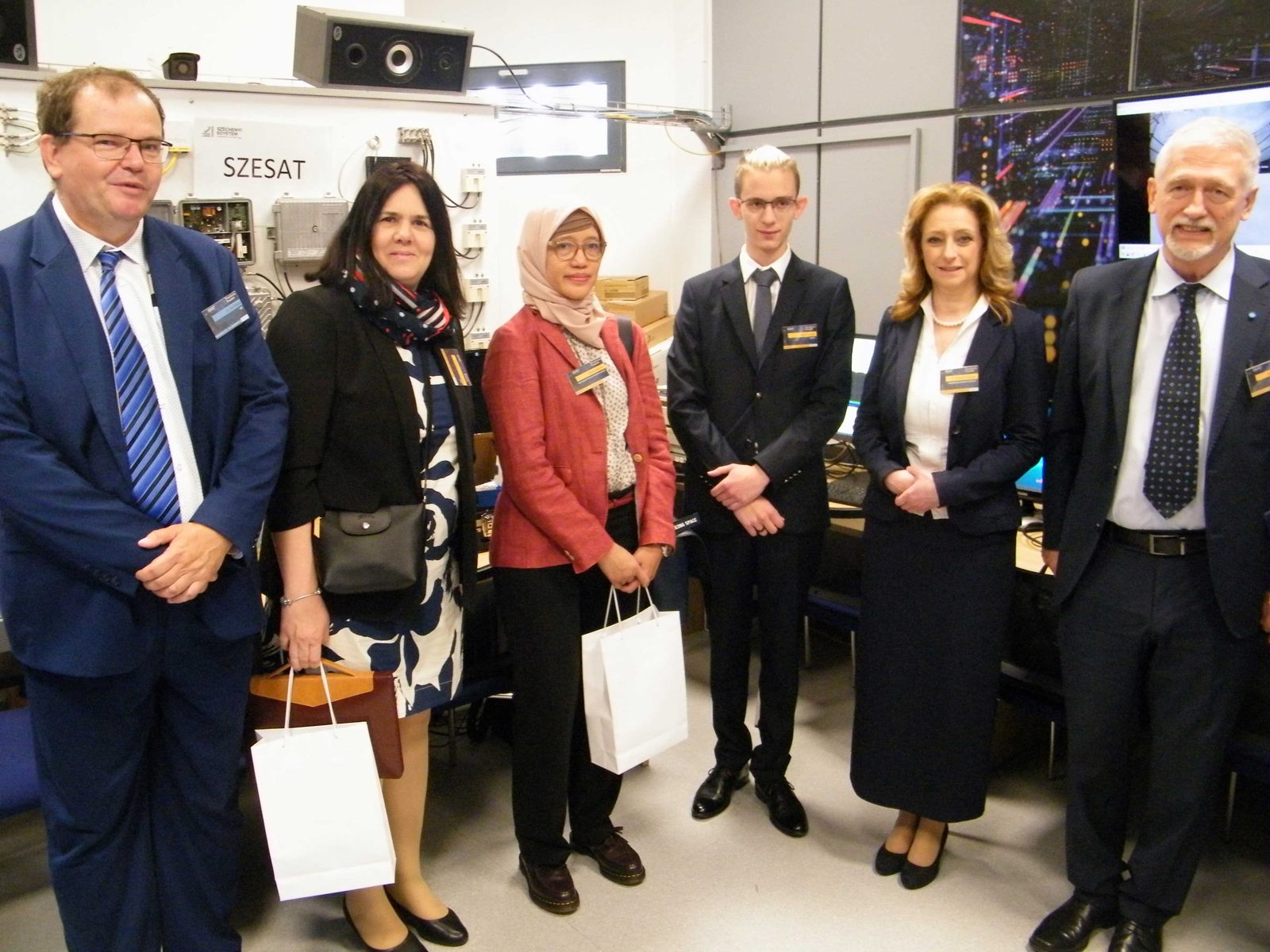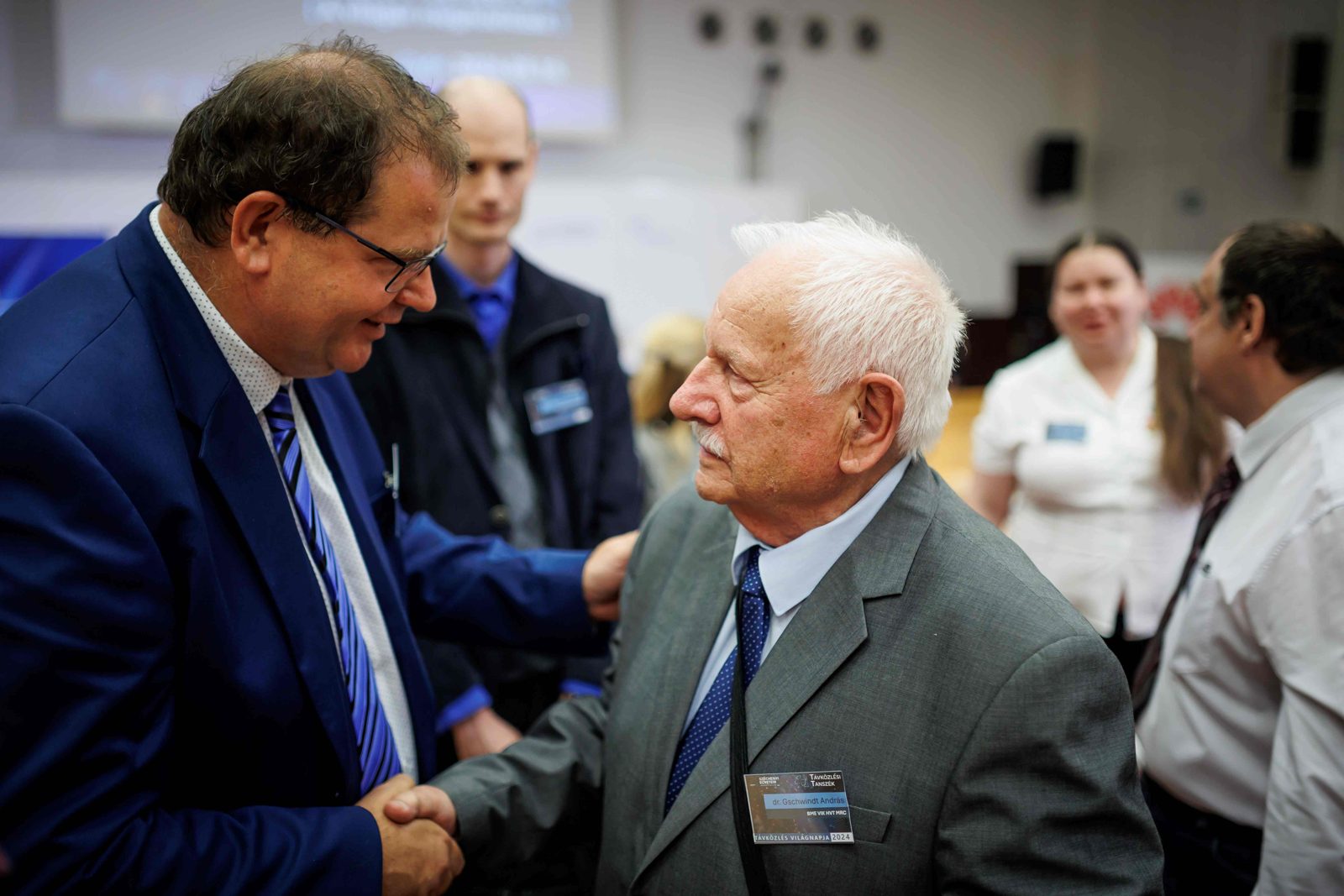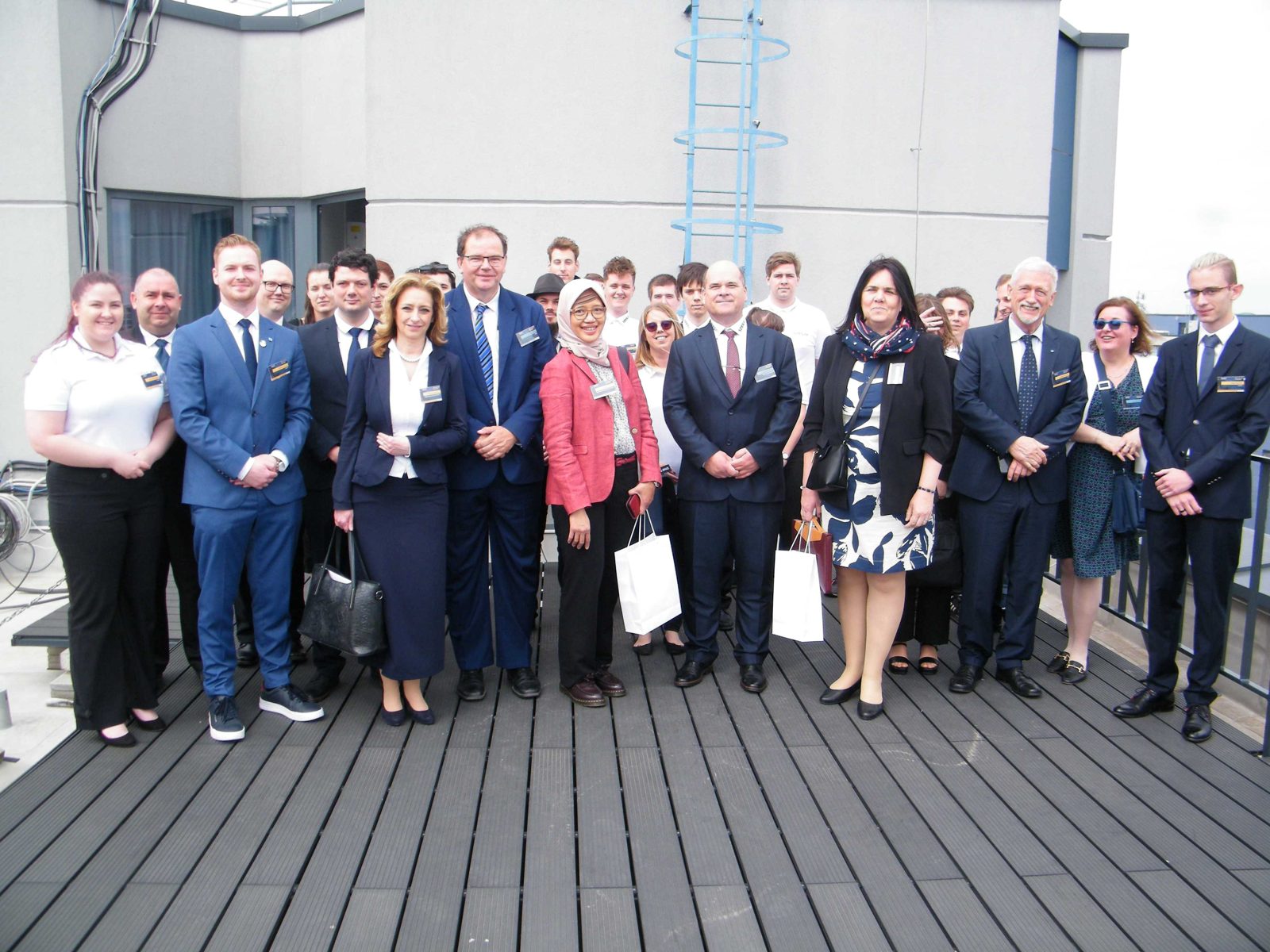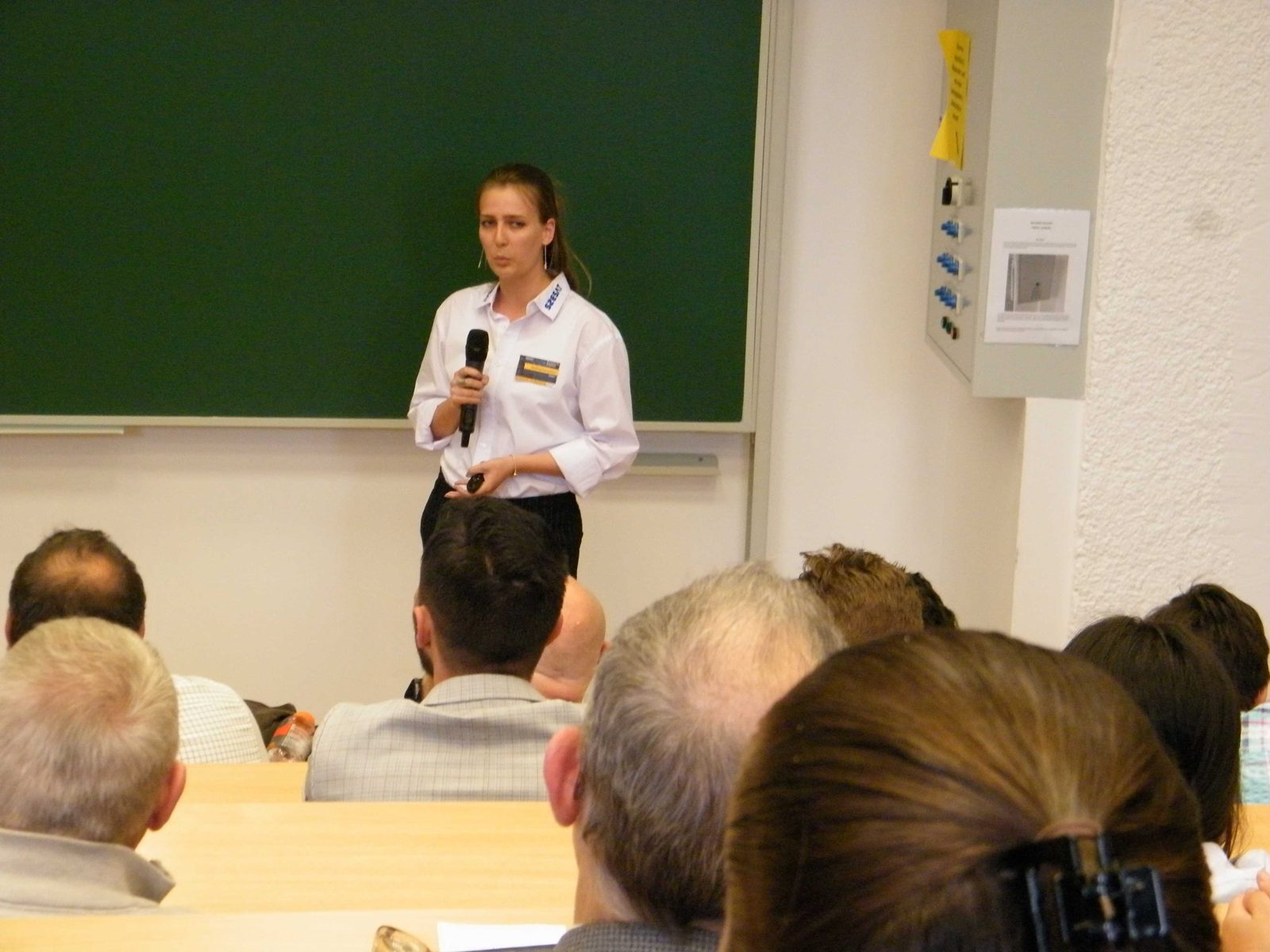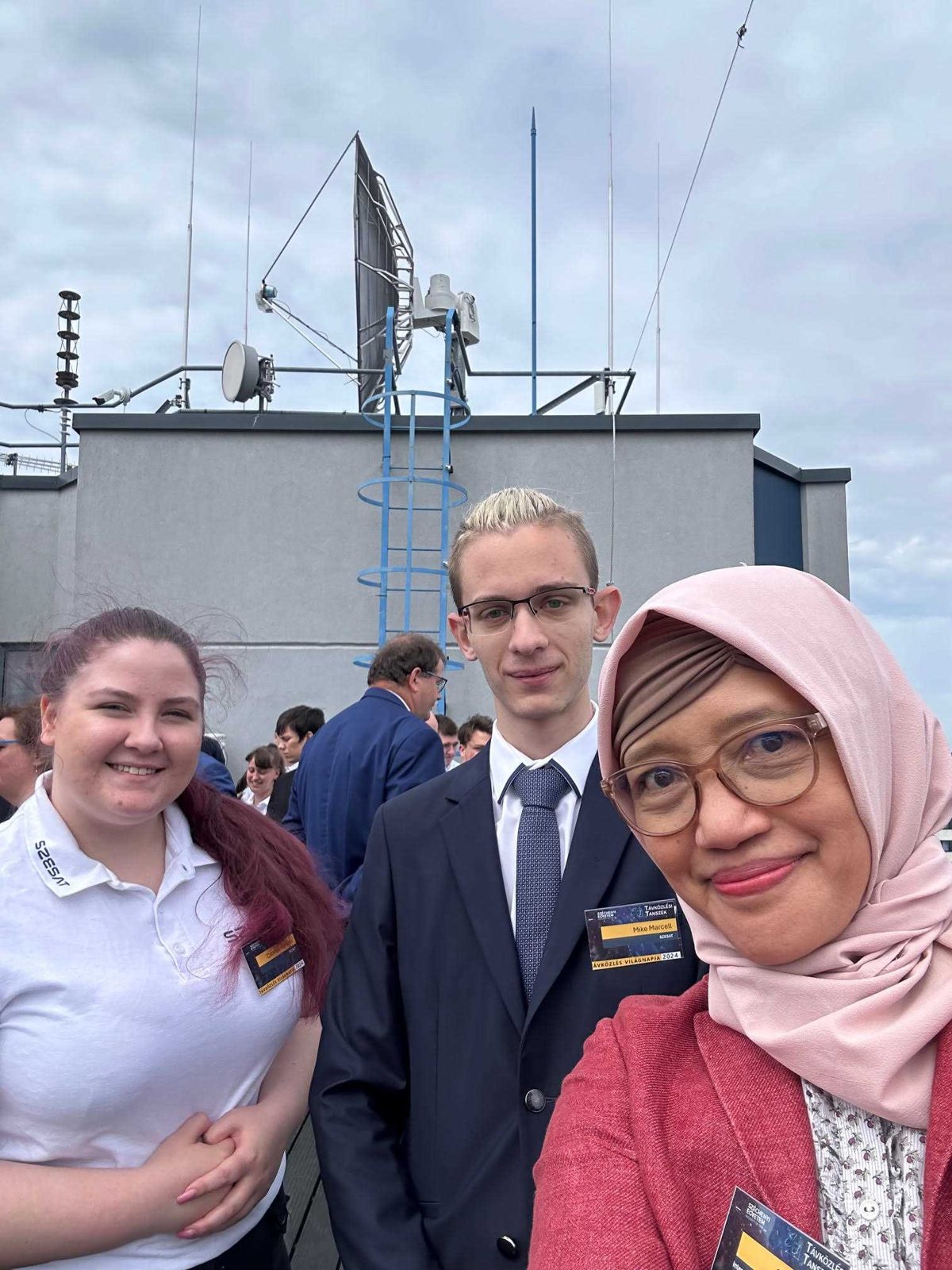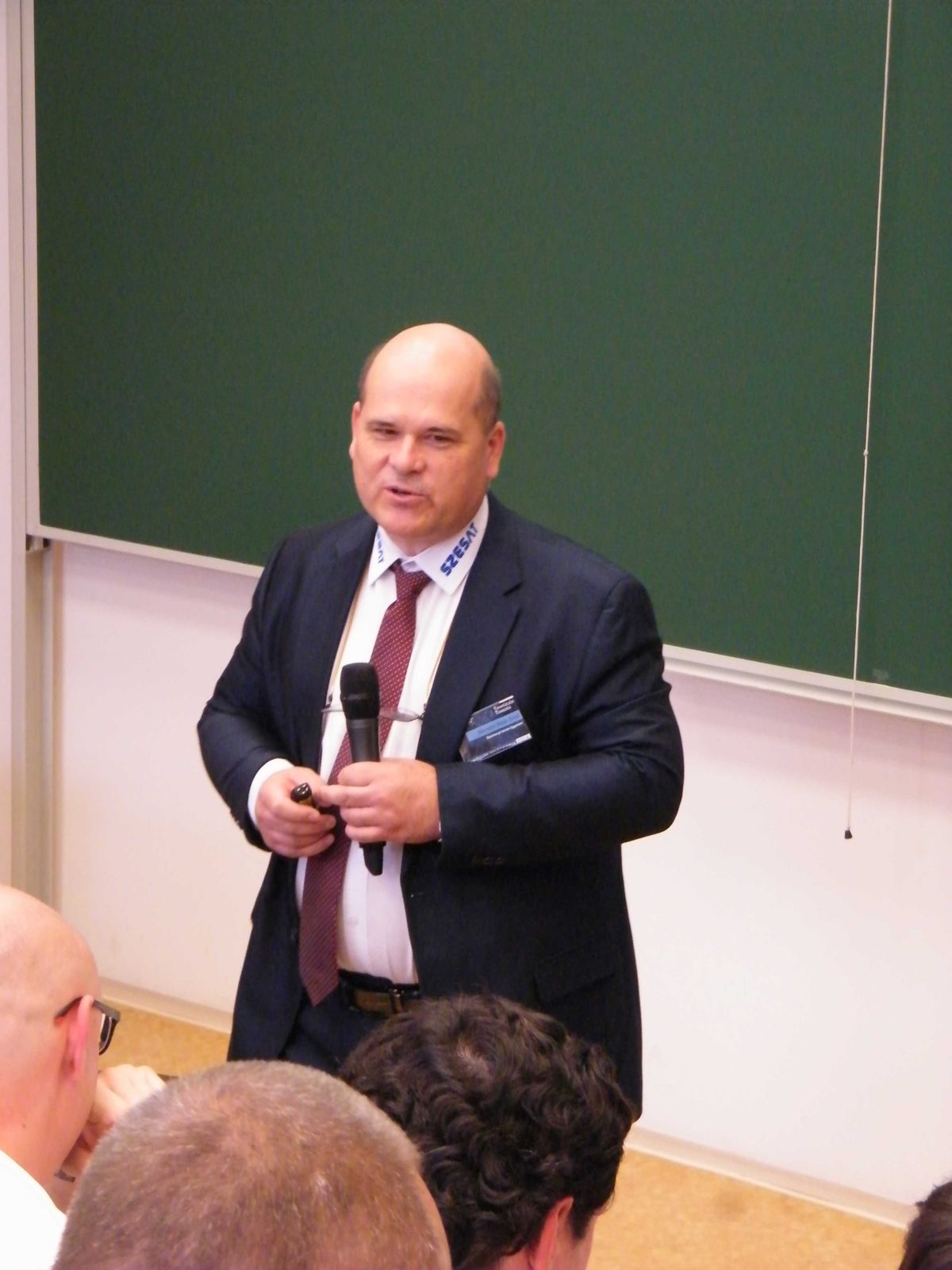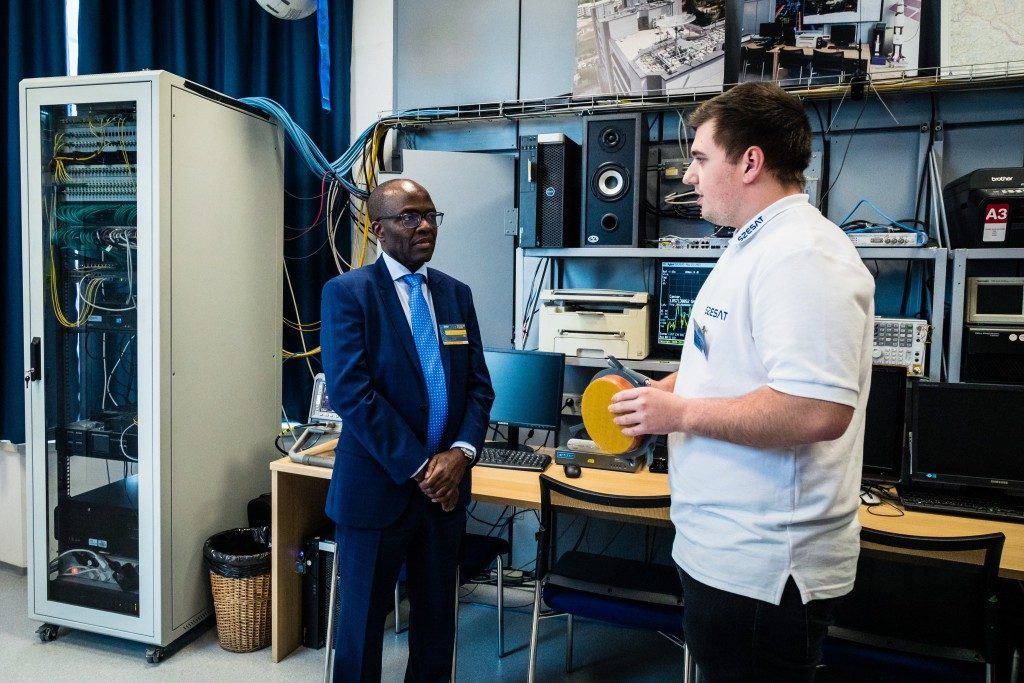
There was no doubt that we wanted to share the achievements we made at the beginning of the year with the interested participants of World Telecommunication Day. We approached the organizers of World Telecommunication Day, now as an independent college, and, true to tradition, they gave us the opportunity to present in the student section. This year was special for us, as we could once again welcome renowned figures who have followed our activities since our very first steps: Dr. Orsolya Ferencz and Dr. Kornélia Radics. It was an honor for us to welcome Karina Cessy, ITU-R space telecommunications expert, at our ground station. We were also able to consult with Örs Hunor Detre about the formation of CanSat-Lab and future plans.
1) In the footprint of the ISS, Katherine Caczo, Máté Péter Tóth
In 2025, we can welcome a Hungarian astronaut aboard the ISS. We can learn about the steps of planning and building radio communication with him during the presentation. It is important to choose as low-noise an installation site as possible for our ground station. Their presentation can be viewed here:
2) Steps towards an independent satellite. Zoltán Nagy, Ágoston Koppány Szűcs, Gábor Marton, Leon Maszlov
The team reported on their experiences in the ESA Fly Your Satellite programme. The knowledge gained here inspired the team to begin designing a joint satellite with BME. We can learn about these steps in the presentation. Their presentation can be viewed here:
3) Development of the ground station - the road towards the "S" band, Marcell Mike
The in-house developed "S" band amplifier made it possible to receive a new frequency band at the ground station. With the new frequency band, receiving and decoding dazzlingly beautiful images of the Earth and the Sun became possible. We can enjoy these images together with the presenter. Their presentation can be viewed here:
4) Tracking the stars with radio, Benedikta Rédling
Few people know that astronomy is not only an exciting activity in the visible light spectrum. With our antennas we can also observe planets such as Jupiter, which has a magnetic field. Between 18-22 MHz, we can occasionally detect signals of S- and L-type bursts using the Yagi antenna on the roof of the college as well. We also learn how easy it is to track another moving celestial body with our antenna from a moving celestial body during the presentation. Their presentation can be viewed here:
5) Radio frequency measurements from the air, Péter Béres, Martin Magyar, András Simon
The team continued their research in the field of airship flying. They made their airship suitable for measuring mobile network coverage. In their presentation, they also covered the measurement of electrical emissions of the measuring airship itself in an EMC chamber. Their presentation can be viewed here:
6) Satellite communication and artificial intelligence, Anomaly detection in broadcast transmissions with autoencoder networks, Péter Pataki, Szilárd Takács
Nowadays it is unavoidable not to apply artificial intelligence in the field of space telecommunications or broadcasting. The two PhD students give a brief overview of their research. Their presentation can be viewed here:
Of course, thanks to all our SZESAT members and teachers who helped the presenters prepare their presentations!
In a few photos, we try to convey the atmosphere of World Telecommunication Day.
The archive reports are based on the college’s contemporary documentation.