It is no secret that we also want to build our own small university satellite. During the construction of the MRC-100 satellite we developed an excellent partnership with the BME team. This joint effort inspired us to build a twin satellite together with them. The 3PQ-sized satellite will carry 1 PQ BME, 1 PQ SZESAT and 1 PQ guest experiment.
Let us take a look at the modules that make up the SZESAT satellite:
Battery system (BAT)
Battery mounting, insulation, protection and temperature measurement.
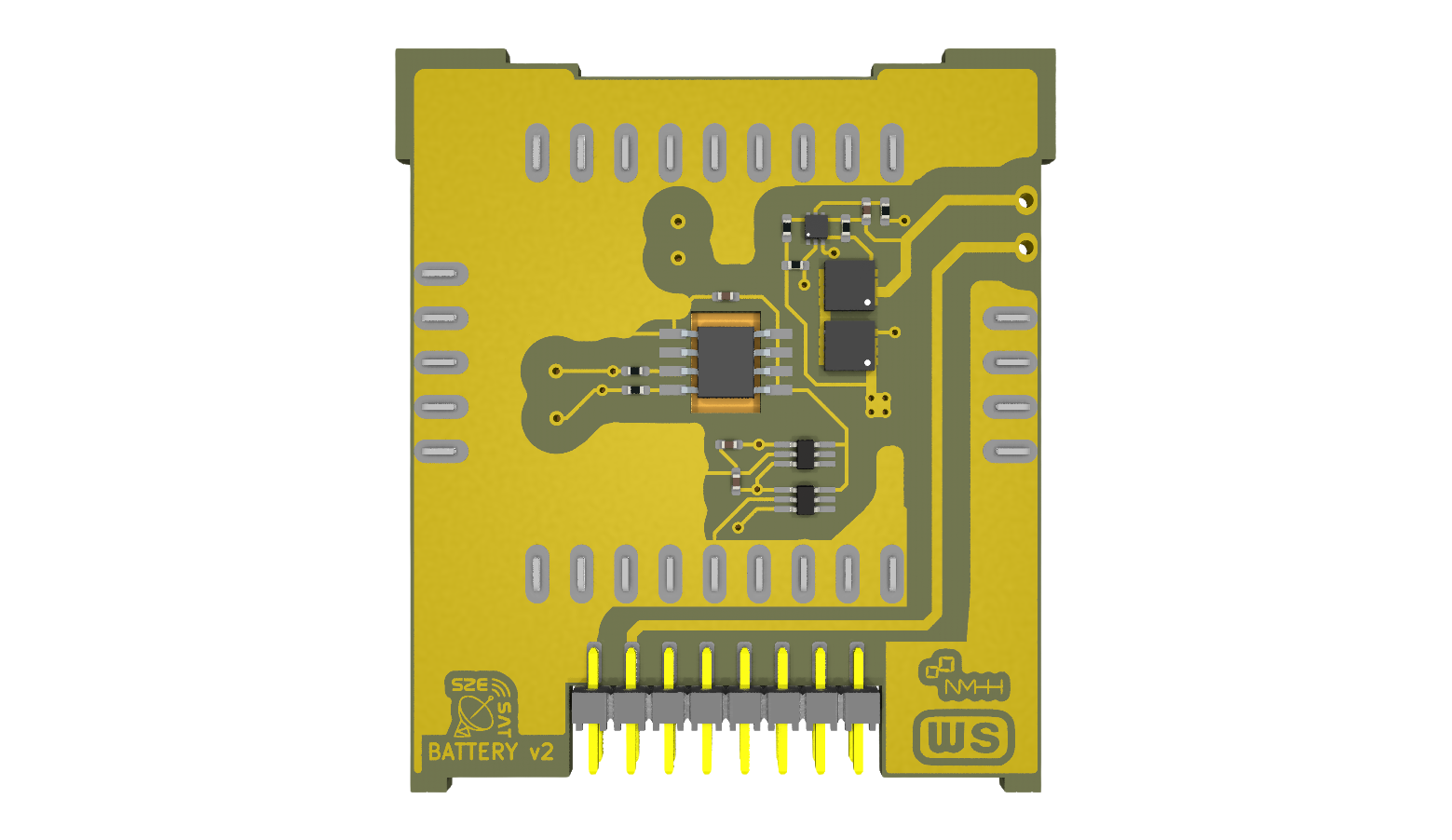
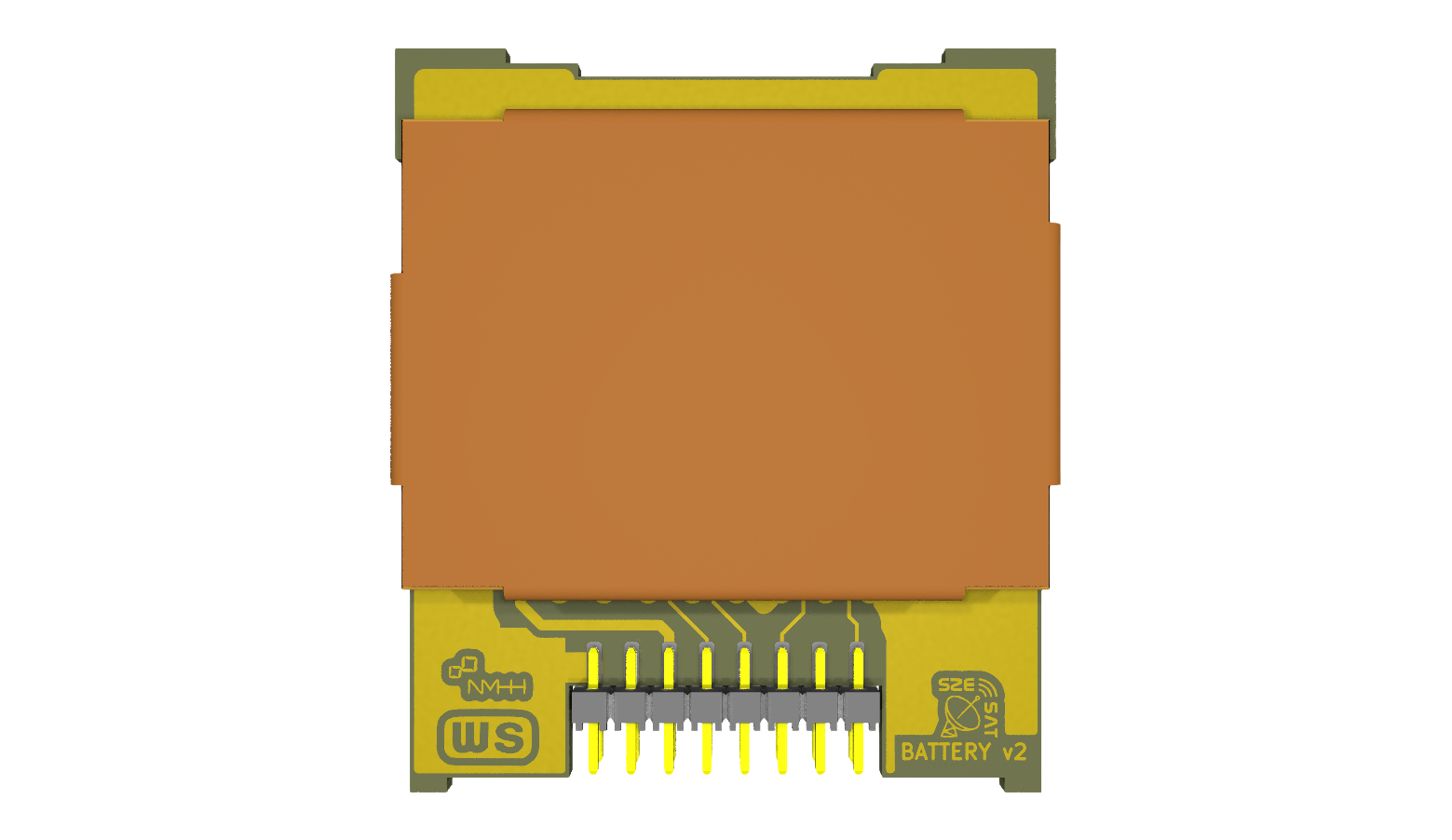
The battery system is located on the BAT panel of the SZESAT satellite. The battery is mounted on the BAT panel and is thermally and electrically insulated.
The system protects the lithium-ion battery against overcharging and deep discharge. An additional safety feature is that it can intervene in the event of a short circuit and electrically disconnect the battery. It also provides measurement data on the battery temperature.
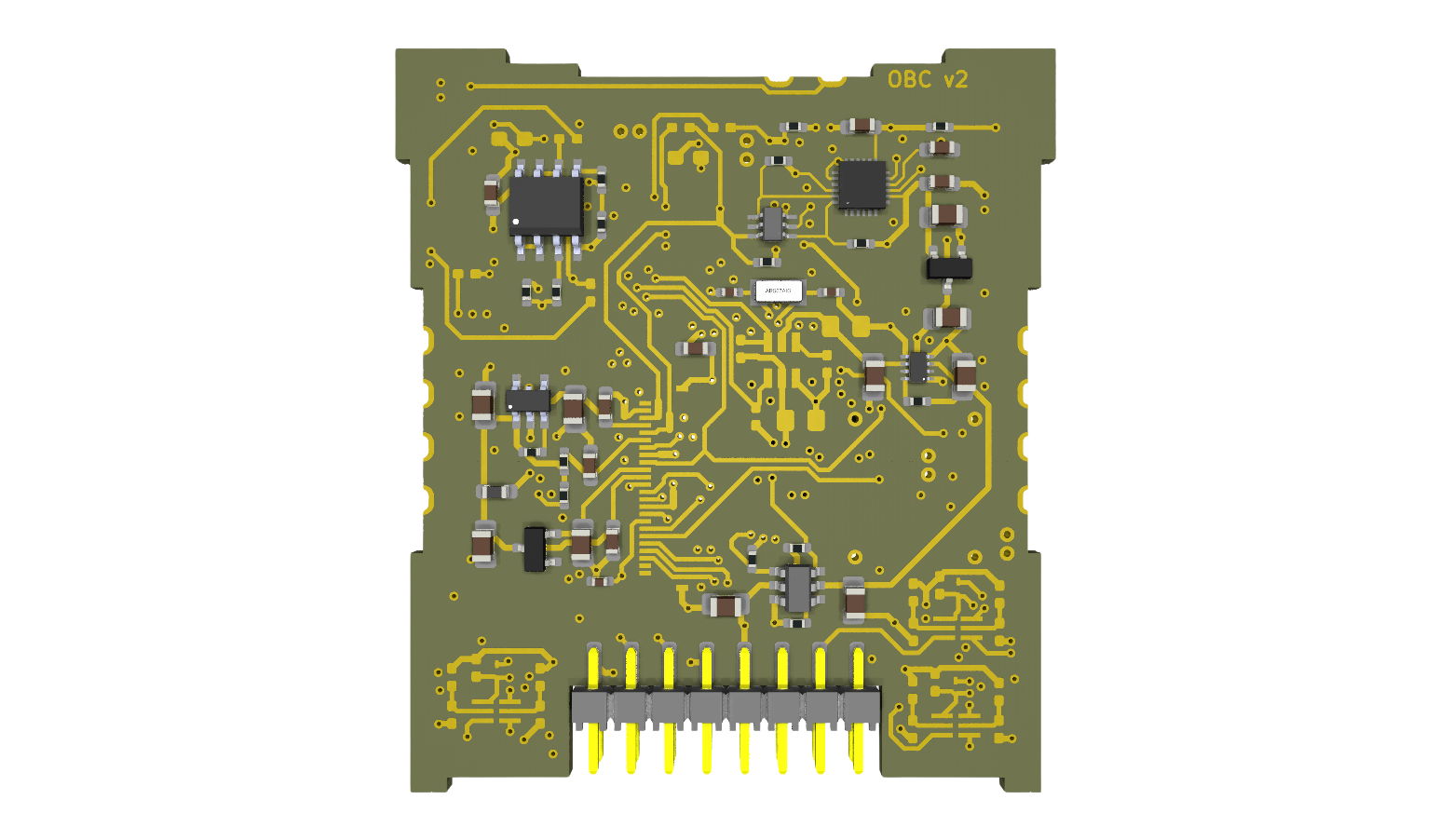
On-board computer (OBC)
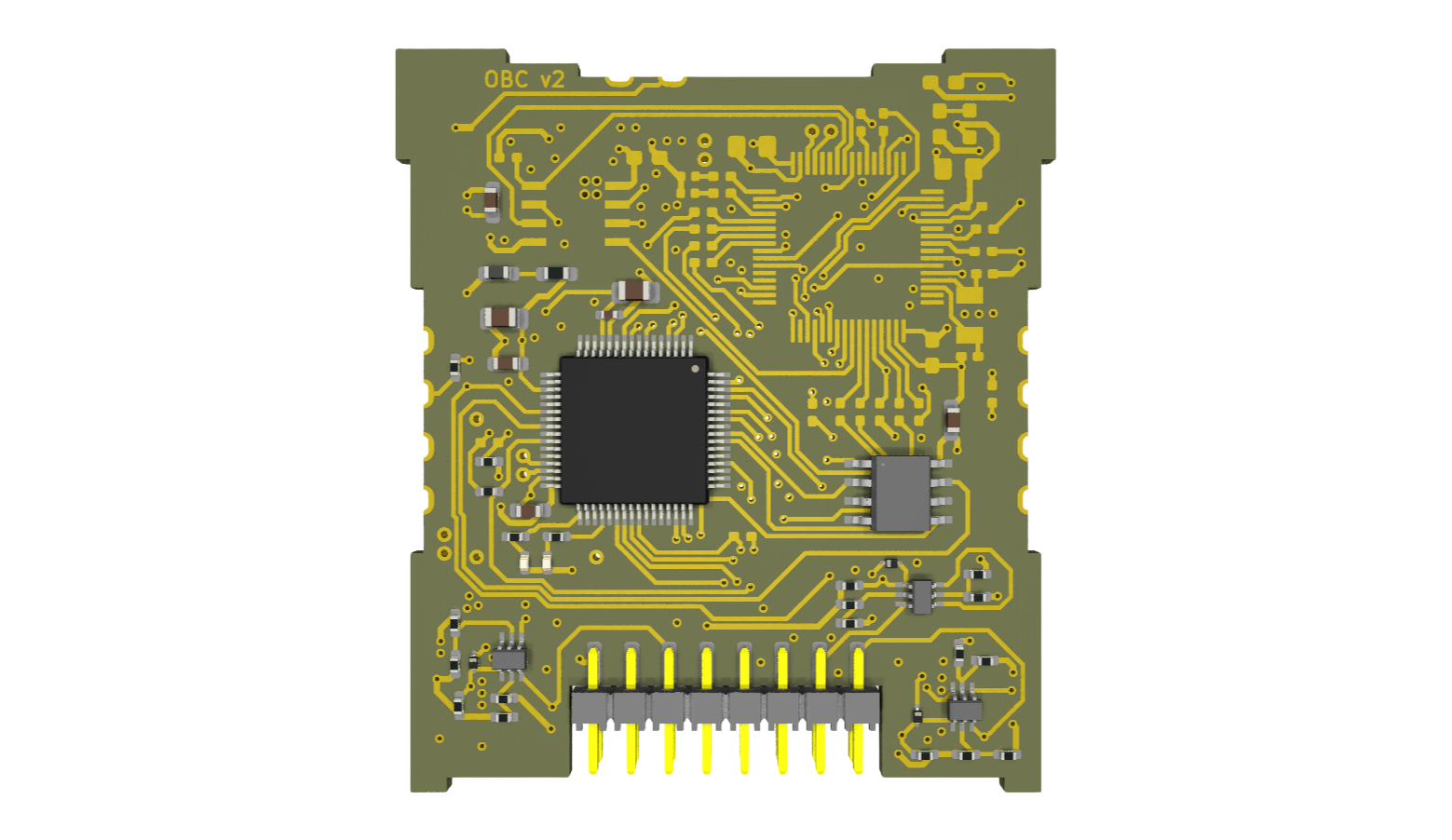
Ensuring communication between the satellite modules, managing the 9-axis multi-sensor inertial measurement unit (IMU) and the laser experiment, and transmitting telemetry to the radio communication system.
The OBC controls the operation of the other subsystems, coordinates communication between them and maintains contact with the BME control computer. Its microcontroller can operate in several modes depending on the available energy level.
The IMU (accelerometer, gyroscope and magnetometer) is used to estimate the orientation of the satellite. The laser experiment is carried out in the infrared range using phototransistors: it detects light within the operating range and draws conclusions from the results.
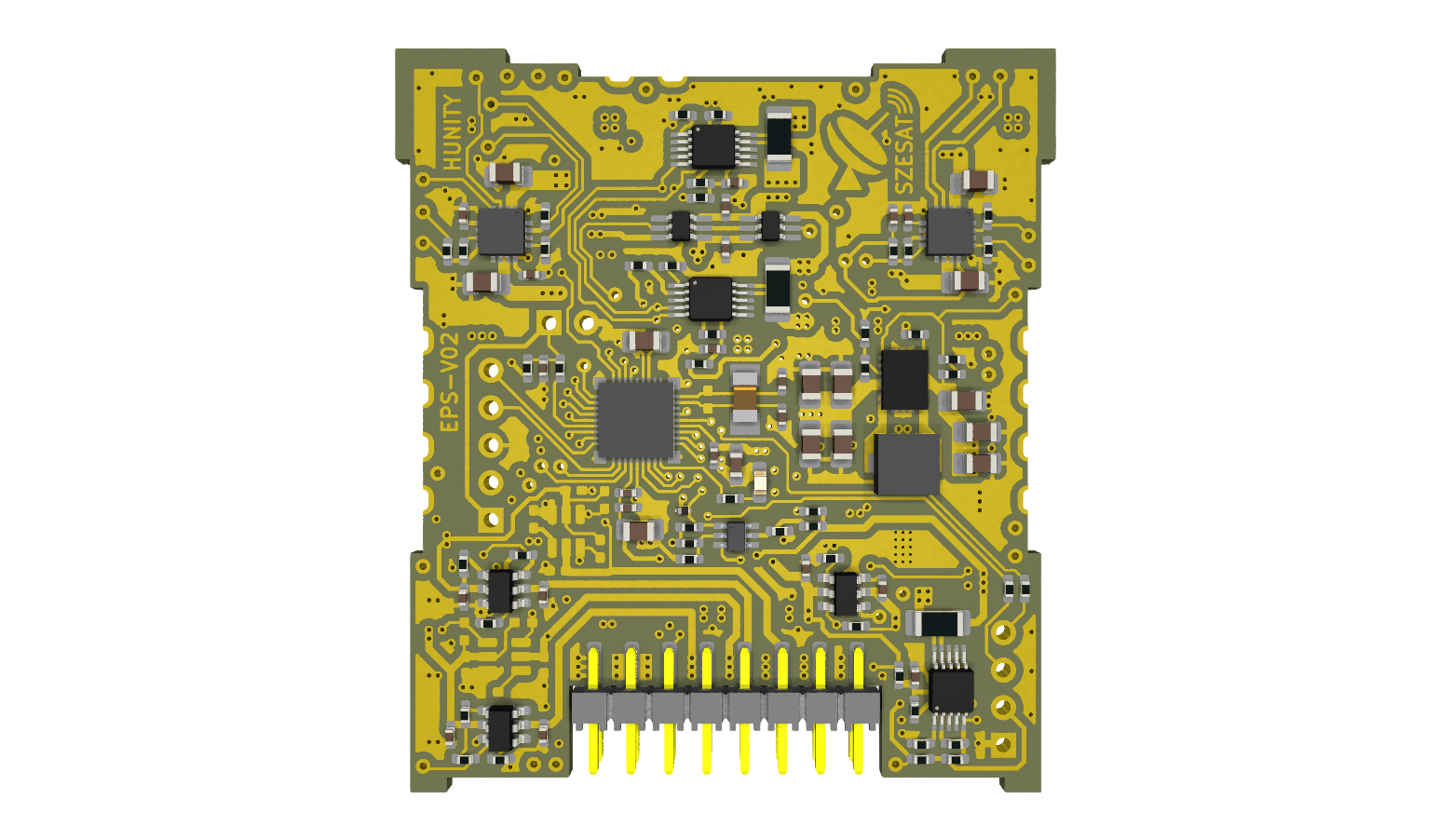
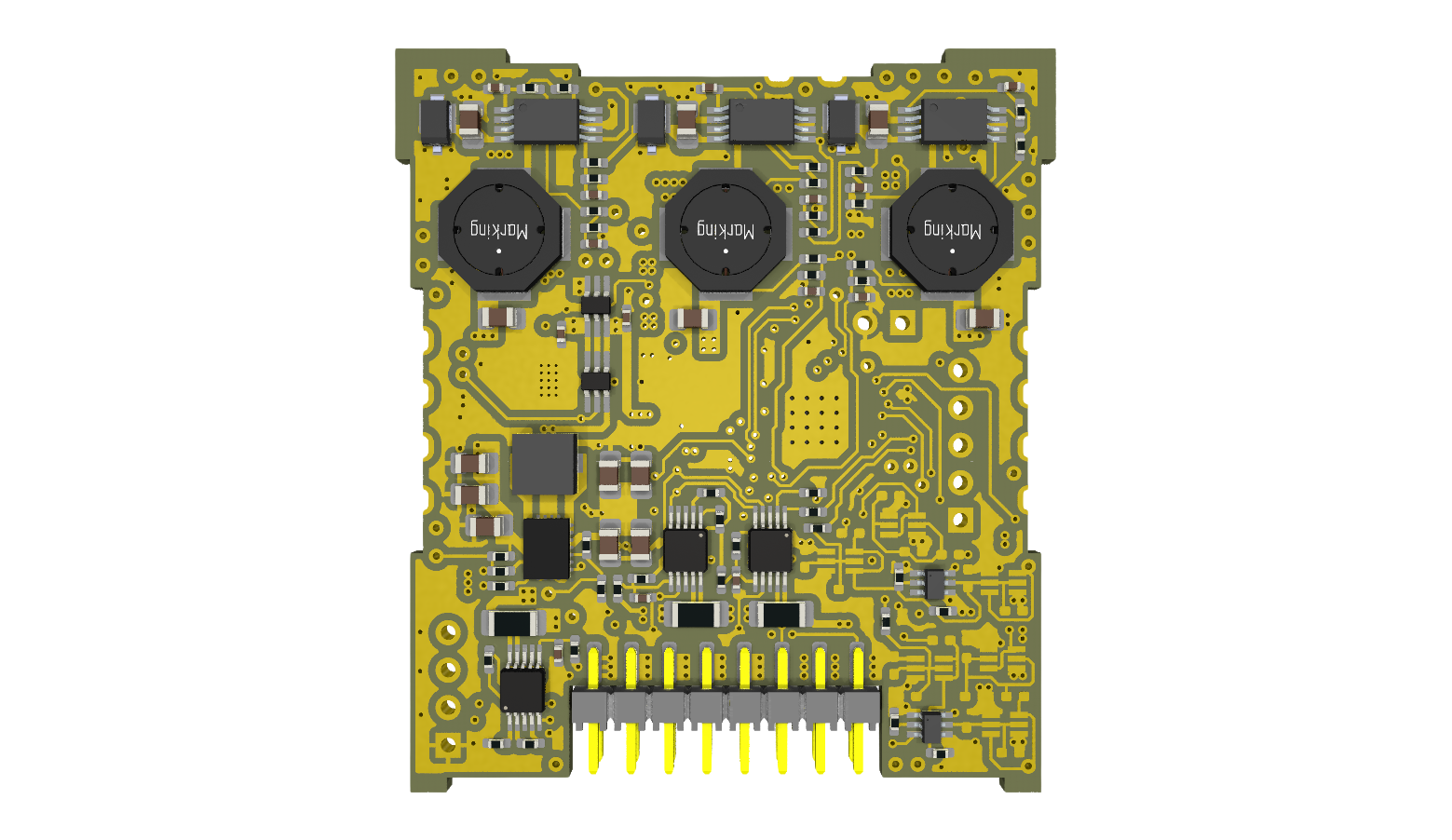
Power supply system (EPS)
Conversion of the energy obtained from the solar panels, battery charging, power supply for the SZESAT modules, and energy management and monitoring of the entire system.
MPPT (Maximum Power Point Tracking) circuits transfer solar energy to the battery charger electronics with maximum efficiency. Charging is controlled and monitored.
The EPS generates the operating voltage levels of the on-board systems and has subsystem-level protections against overload. Its integrated measurement system provides a comprehensive overview of the solar panels, the battery and the consumers.
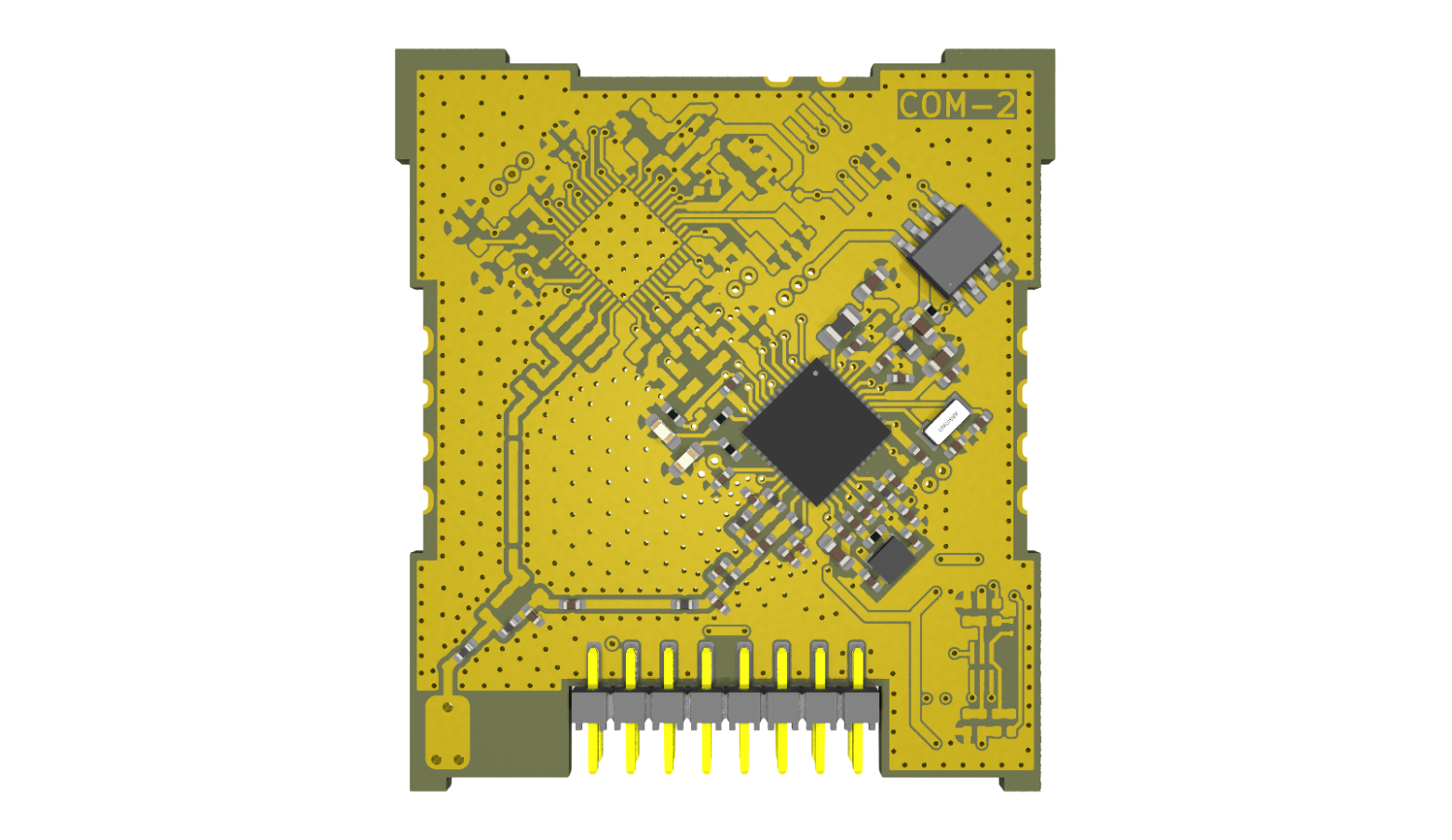
Radio communication system (COM)
Sending images, transmitting telemetry data and maintaining contact with the ground station.
Based on instructions from the on-board computer, the system transmits telemetry using two modulation techniques — FSK and LoRa — and can also send images.
Data transmitted with LoRa modulation is available through the TinyGS network, FSK data through the SatDump software. The COM transmission is synchronised with the BME transmission.
If there are satellites, there must be ground stations too! The ground station on the roof of the University of Győr, created after careful site selection, requires continuous development and operation.
If the legal predecessor of our university had existed in 1868, Dávid Schwarz would certainly have spent his student years with us and taken an active role in founding the college. Following in the footsteps of the famous Hungarian inventor, we rise to the heights with our high-altitude balloons and airship.
We have long explored the universe with our telescopes from here on Earth, but observation requires a clear sky. Cloudy weather does not discourage us: then we use our antennas to explore everything that is invisible to the eye. As Antoine de Saint-Exupéry taught us: “What is essential is invisible to the eye.”
A CanSat is a soft-drink-can sized satellite model that walks through the whole life cycle of a real space mission in a few minutes: design, integration, testing, rocket launch, parachute descent and downlink of the measured data to the ground station.
The Management section keeps the daily life of the college running: project scheduling, coordination of resources and procurement, preparation of grant applications and reports, and organising cooperation between the sections.